Mindful breakfast ideas begin with a small, practical question: what would feel good to eat, and what can you realistically prepare this morning? Choose a familiar base, add ingredients you enjoy, and give yourself enough flexibility to change the plan. Breakfast can be assembled, reheated, or carried along; it does not need an elaborate morning ritual.
Start with the morning you actually have
A breakfast that suits a quiet Saturday may be completely wrong before an early train. Separate your usual mornings into three situations: time to cook, time to assemble, and time to leave. Give each situation one dependable option. This reduces the number of decisions without asking you to eat the same thing every day.
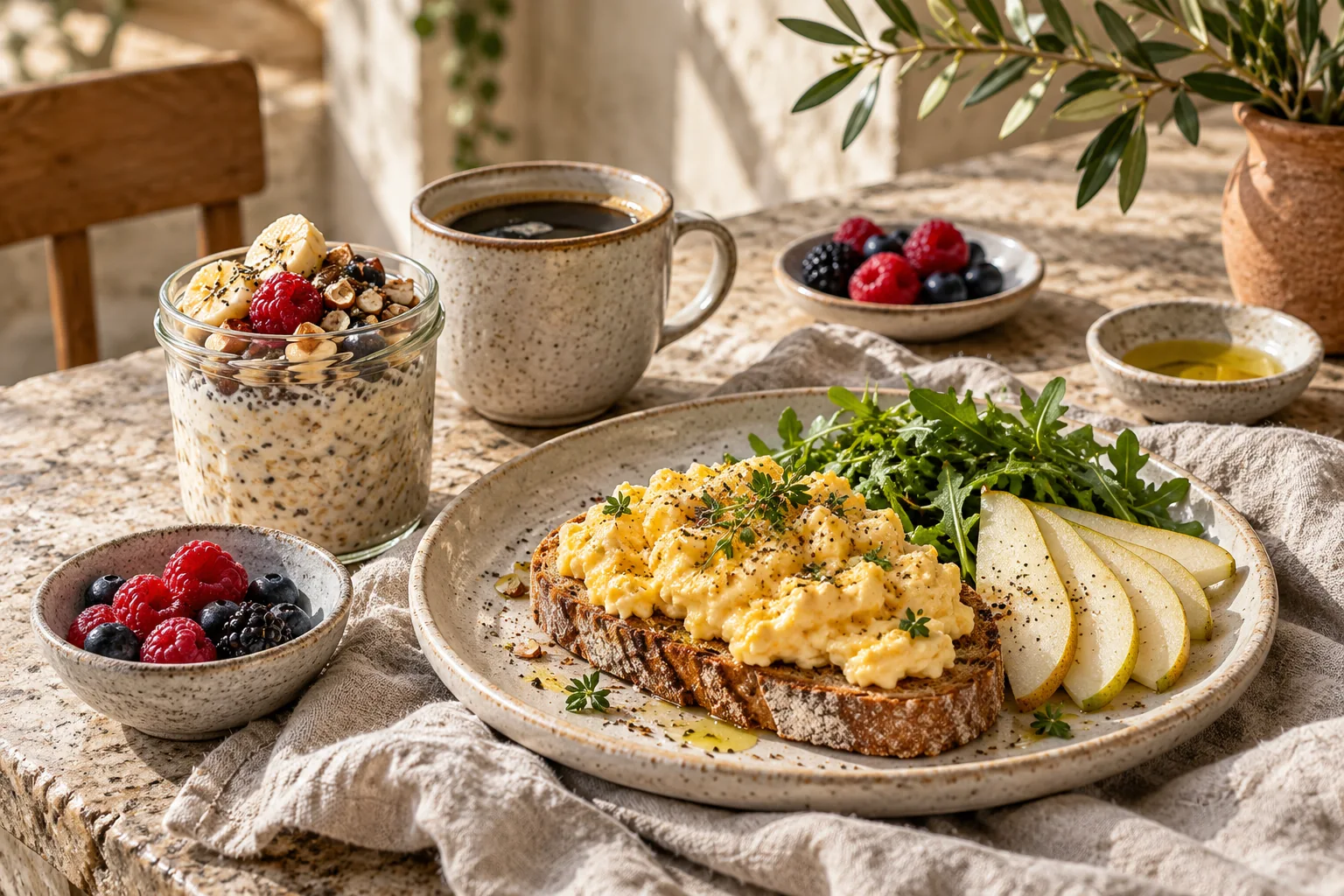
For a cooking morning, choose a warm oat bowl or toast with a freshly prepared topping. For an assembly morning, keep yogurt or a suitable alternative alongside oats and fruit. For a leaving morning, pack the components in containers that travel well. Perishable foods still need appropriate temperature control, even when the commute is short.
The mindful part can be modest: notice whether you prefer something warm, crunchy, soft, or savory. Let that information guide the meal. You do not need to turn breakfast into a performance or put your phone away for a prescribed amount of time.
A flexible overnight oat jar
Starting proportions for one jar
- ½ cup rolled oats
- ½ cup milk or a plant-based alternative
- ¼ cup plain yogurt or a suitable alternative
- ½ cup chopped fruit, added when serving
- Optional: cinnamon, chopped nuts, seeds, or a little jam
Stir the oats, liquid, and yogurt together in a covered container. Refrigerate for the oats to soften. Before eating, stir again and loosen with more liquid if needed. Add fruit and any crunchy toppings at the end.
Rolled oats give a different texture from quick oats, so treat the liquid amount as a starting point. If the mixture feels heavy, add liquid a spoonful at a time. If it is too loose, add a few more oats and allow them time to absorb moisture. Check ingredient labels if you need an option suitable for a particular dietary restriction.
Try apple with cinnamon, pear with chopped walnuts, or berries with a spoonful of jam. Frozen fruit can make the mixture more watery as it thaws; thaw it appropriately and account for that extra liquid. Keeping toppings separate also lets different people finish their own jars without preparing completely separate breakfasts.
Make toast into a useful little meal
Toast works because the base is familiar while the toppings can change. Start with bread you like, toast it to your preferred texture, and add something spreadable before anything loose. A spread helps hold the other ingredients in place and makes the bite less dry.
| Direction | Suggested combination | Easy adjustment |
|---|---|---|
| Savory and bright | Hummus, cucumber, chopped herbs | Use grated carrot instead of cucumber |
| Soft and sweet | Nut or seed butter, sliced banana, cinnamon | Choose a suitable spread for your needs |
| Creamy and fresh | Ricotta, sliced pear, black pepper | Use a dairy-free spread you enjoy |
| Pantry-led | Mashed white beans, olive oil, lemon | Add vinegar when no lemon is available |
Use roughly two tablespoons of spread per slice as an assembly guide, then adjust for the size of the bread. Pat wet vegetables dry before adding them. If carrying the breakfast, pack juicy toppings separately and assemble when you arrive. This small change usually matters more to texture than buying a different type of bread.
A warm breakfast without a complicated recipe
For a savory bowl, combine a portion of appropriately stored cooked rice or another grain with beans and vegetables. Warm the components following suitable food-handling guidance, then finish with olive oil, lemon, herbs, or a sauce you already have. This is a useful destination for planned meal components, rather than an instruction to rescue leftovers of uncertain age.
An example combination is ¾ cup cooked grain, ½ cup drained chickpeas, and a handful of cooked spinach, finished with a spoonful of yogurt and a squeeze of lemon. Change the quantities to suit your appetite. Keep some contrast: a creamy topping helps a dry grain, while chopped cucumber or seeds can add texture.
Breakfast foods do not need their own separate shopping category. If yesterday's lunch components sound appealing today, use them. Our guide to building a bowl offers more combinations that work beyond lunchtime.
Prepare the decision, not an entire production line
The night before, choose your breakfast base and put the nonperishable equipment where it is easy to reach. Set out a clean bowl and spoon. Put oats near the kettle or leave a note identifying the refrigerated components. Keep foods that require refrigeration in the refrigerator, even if putting everything on the counter looks more organized.
Prepare only the ingredients whose quality holds up well for your chosen meal. Whole fruit may be more convenient than pre-cut fruit. Toast is usually better made when needed. Crunchy toppings belong in a dry container. A realistic preparation habit removes friction without creating a second evening cooking session.
Check the FoodSafety.gov cold food storage chart for guidance appropriate to the ingredients you use. Label prepared components so you know what they are and when they were made; a neat container cannot tell you whether its contents were stored safely.
Small mistakes that make breakfast harder
- Planning five unrelated breakfasts. Start with two bases and vary toppings so open ingredients have a purpose.
- Preparing everything wet together. Separate bread, crisp toppings, and juicy fruit until serving when texture matters.
- Buying ingredients for an imagined routine. Choose foods you enjoy eating on an ordinary workday.
- Ignoring the container. A leaky jar or awkward lid can make a good breakfast impractical.
- Treating substitutions as identical. Different yogurts, breads, and milks change flavor and consistency; taste and adjust.
Try the same base on two different mornings
A small experiment is easier to learn from than a complete breakfast overhaul. On the first morning, serve toast with a spread and sliced fruit. On the second, keep the same bread but choose a savory topping such as mashed beans and chopped herbs. Notice which preparation steps fit the time you actually have, and whether either meal is awkward to eat where you usually sit.
Write down one useful adjustment: a different bread thickness, fruit served separately, or a topping prepared ahead. You are building a repeatable option, not scoring your breakfast. If neither version appeals, change the base before buying more toppings. The ingredients left over can move into lunch rather than becoming a reason to force the same meal again.
Breakfast questions
What if I do not want a sweet breakfast?
Use savory toast, a bean bowl, or leftovers that have been stored appropriately. Herbs, lemon, and a familiar spread can make a simple combination feel complete without adding sweet ingredients.
Can I make breakfast with very few ingredients?
Yes. Bread with a spread and fruit, or oats with milk and cinnamon, can be a useful starting point. Extra toppings are optional. Choose portions and additions according to your own needs rather than a fixed checklist.
How can a household share breakfast without everyone eating the same thing?
Offer one base with two or three separate toppings. One person might choose fruit and another a savory spread. Keep allergen-related needs in mind when sharing utensils and preparation surfaces.
Choose one breakfast for tomorrow, identify what can be prepared tonight, and stop there. A manageable morning kitchen routine grows from useful repetitions, not from adding more tasks.