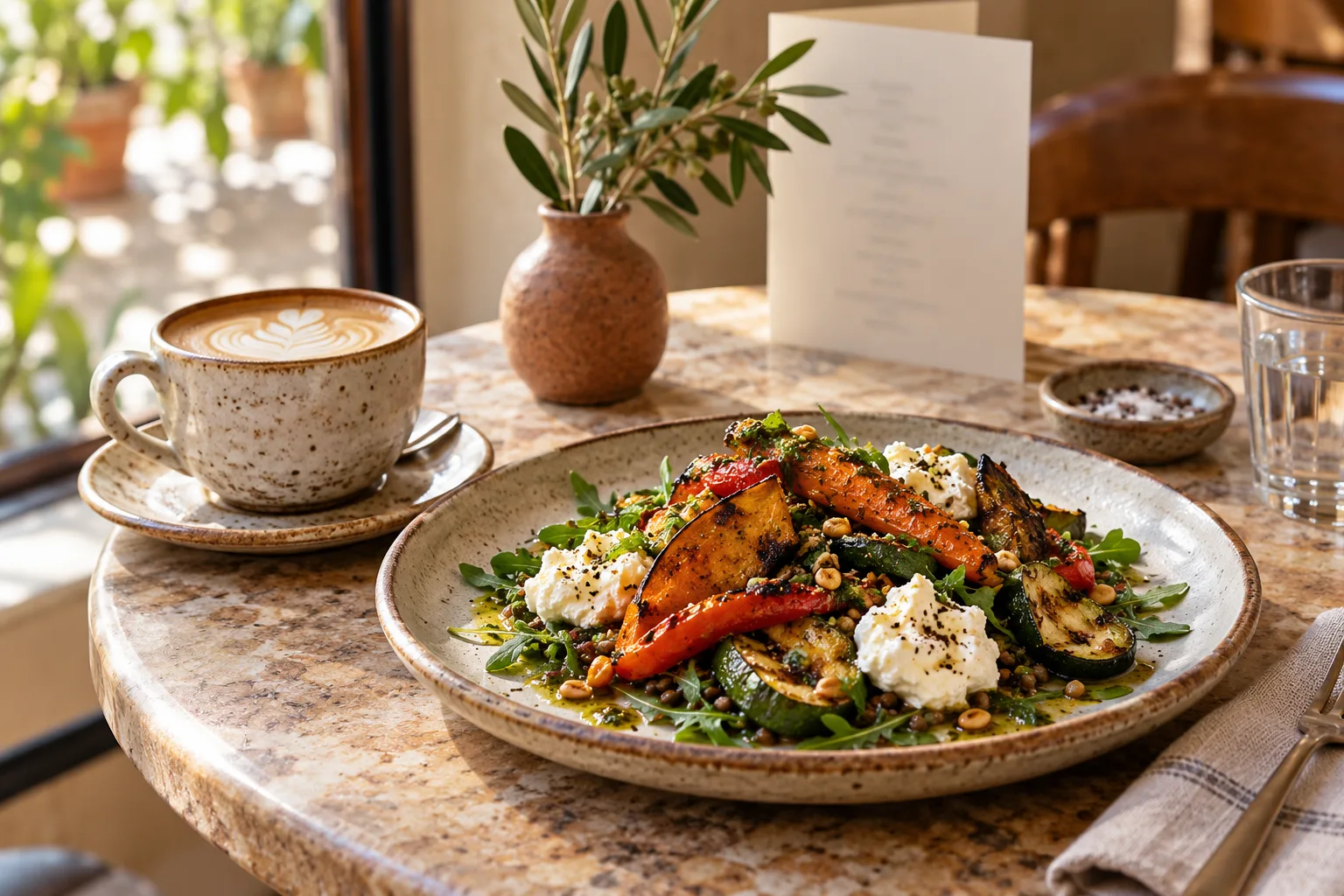
Read a restaurant menu by separating three things: what the dish contains, how it is prepared, and what the listed price includes. Descriptive language can suggest a flavor or style, but it may leave out sauces, garnishes, substitutions, and allergen information. Use the menu to narrow your choices, then ask specific questions before ordering.
A menu is both a practical list and a piece of marketing. Words such as “signature” or “house favorite” tell you how the restaurant presents a dish; they do not explain its ingredients. You do not need specialist culinary knowledge to order well. A method for spotting missing information is more useful than memorizing every cooking term.
Begin with the structure
Look for sections, portion descriptions, and service conditions before comparing individual dishes. A lunch menu may differ from an evening menu. A small plate may be intended for sharing, while an entrée may arrive without the sides you expect. Regional terminology also varies, so ask when a label is unfamiliar.
Check whether there is a set menu, a minimum order, or a note about additions. If you are comparing options before a visit, make sure you are looking at the relevant location and service period. A beautifully photographed menu can still belong to another branch or an earlier offering.
Translate descriptions into useful questions
Preparation words offer clues, but they do not tell the whole story. “Grilled” describes a cooking method and says little about the marinade or finishing butter. “Crispy” may suggest a coating or frying, yet the exact method remains uncertain. “Creamy” could refer to dairy, a vegetable purée, or another ingredient.
| Menu wording | What it suggests | What still needs checking |
|---|---|---|
| House dressing | A restaurant-specific sauce | Ingredients and whether it can be served separately |
| Seasonal vegetables | A changing vegetable selection | Today's vegetables and preparation |
| Chef's selection | A choice made by the kitchen | Current contents and substitution limits |
| Plant-based | An emphasis on plant ingredients | Whether every component fits your requirements |
| Sharing plate | A format intended for the table | Portion size and practical number of servings |
Use this as a question guide rather than a dictionary of guarantees. Restaurants use language differently. The person taking the order can explain what a term means in that kitchen, or check with someone who knows.
Read the entire dish, including the small print
Start with the main ingredient, then identify the sauce, side, garnish, and cooking liquid where listed. A vegetable dish might include a cheese topping; a soup may use a stock that is not obvious from the title. A sandwich description may leave the bread or spread unspecified. These details matter when they affect preference or dietary suitability.
If you dislike one ingredient, ask whether it is added at the end or already mixed into a prepared component. Removing a garnish is a different request from changing a sauce that has been made in advance. Being precise helps the staff give a useful answer without a long sequence of guesses.
When an ingredient is unfamiliar, ask what flavor or texture it contributes. “Is the sauce sharp, sweet, or creamy?” may help more than asking whether a dish is good. Your aim is to understand what will arrive, not to test the server's vocabulary.
Compare complete orders
The headline price is only part of the decision. Look for optional additions, separately priced sides, different sizes, and substitution charges. Taxes, service charges, and tipping practices vary by location and venue. Check the restaurant's current information and ask if the total is unclear.
Avoid assuming an upgrade is complimentary because it is offered casually. “Is there an extra charge for that?” is a straightforward question. If sharing, check whether the portion is suitable and whether any sharing or additional plate policy applies. There is no need to apologize for clarifying the cost before you commit.
Separate preferences from safety questions
A preference question might be, “Could the dressing come on the side?” A dietary question might be, “Does the sauce contain dairy?” An allergy-related conversation needs more specific information than a menu icon can provide. Do not infer suitability from the name or appearance of a dish.
Explain the relevant requirement clearly and ask what the restaurant can confirm about ingredients and preparation. If cross-contact is a concern, discuss that directly with the venue. A request to omit an ingredient does not by itself establish that a meal is suitable. When staff cannot provide the information you need, treat the uncertainty as unresolved.
This guide is about clearer ordering conversations, not individualized allergy advice. Follow your own relevant professional guidance and make decisions using information from the people responsible for the food. Third-party menu summaries cannot assess a restaurant's handling of a particular order.
Use online menus as a preview
Before visiting, you can browse restaurant menus on All the Menus to explore possible dishes and identify questions. This is a third-party resource, not a substitute for the restaurant's current menu or staff confirmation. Check the destination venue for availability, prices, location details, and ingredients before relying on them.
A useful research process is short: identify two appealing options, note any unanswered ingredient question, and check the current official source where available. Saving a screenshot can be convenient, but it will not update when the restaurant changes its menu. Avoid treating a cached price as a promise.
For the practical details around arrival, seating, and ordering, see our guide to planning a café visit. The menu is one part of the visit, alongside operating information and the way service works.
A short ordering conversation
- Name the dish. Give the staff a clear starting point instead of describing several possibilities at once.
- State the relevant question. Ask about the sauce, side, ingredient, or charge that affects your choice.
- Confirm the change. Check whether a requested substitution is possible and whether it changes the price.
- Repeat the final order if needed. This is useful when several changes or similar dish names are involved.
During busy service, keeping questions focused helps everyone. It does not mean skipping information that matters. If a question requires the kitchen to check, allow time for the answer and avoid interpreting a quick guess as confirmation.
Menu-reading questions
Does a vegetarian symbol answer every ingredient question?
No. It may help identify a category, but check the restaurant's definition and any details relevant to your needs. It does not replace an allergy conversation.
Can I ask for a substitution before sitting down?
Yes, if staff are available to answer. This can be useful when a particular option is central to your visit. A possibility mentioned earlier may still depend on the kitchen's current availability.
What if the online and printed prices differ?
Ask which price applies before ordering. Note where you saw the other information, but do not assume a third-party page sets the venue's price.
A clear order comes from a few concrete checks. Read beyond the title, compare the complete meal, and ask the question that will actually change your choice.