Build a balanced bowl by combining a base, vegetables, a protein-containing ingredient, a sauce, and a little texture. Here, balanced means a satisfying mix of flavors and components, not a personalized nutrition formula. Start with ingredients you already have, then adjust the amount and seasoning to fit your appetite.
The five-part bowl framework
A bowl is a useful format because it gives cooked components a clear purpose. Rice left plain may feel unfinished; rice with dressed beans, vegetables, and a sauce becomes a deliberate meal. You do not need every color or a long topping list. A few ingredients that work together are enough.
| Part | Starting amount per bowl | Examples |
|---|---|---|
| Base | ½–1 cup cooked | Rice, barley, couscous, potatoes |
| Vegetables | 1–2 handfuls | Carrot, cabbage, broccoli, greens |
| Protein-containing ingredient | A portion that suits you | Beans, lentils, tofu, egg |
| Sauce | 1–2 tablespoons to start | Lemon dressing, yogurt sauce |
| Finishing texture | A small sprinkle | Seeds, chopped nuts, crisp vegetables |
These amounts describe a starting assembly, not dietary targets. Use a smaller bowl if you prefer a modest meal, or increase components when you need more food. Dietary needs differ; the visual arrangement is not a reliable measure of nutritional adequacy.
Step one: choose a base with the right texture
Cook grains according to their package directions or a method you trust. Different rice varieties require different amounts of water, and couscous is not interchangeable with barley. Once cooked, separate the grains gently where appropriate. A compact mass will be harder to dress evenly than a loose base.
For a lighter-textured foundation, combine some cooked grain with chopped greens. For a more substantial forkful, use potatoes cut into bite-sized pieces. The base need not cover the entire bottom of the bowl. Leaving room for vegetables makes the meal easier to mix and avoids a large mound of plain starch.
Step two: pair one soft vegetable with one crisp one
Texture contrast makes a simple bowl more interesting. Pair cooked carrots with shredded cabbage, wilted greens with cucumber, or roasted cauliflower with radish. Cut the vegetables to a size that can share a forkful with the base. Oversized pieces look dramatic but can make eating awkward.
If roasting, coat vegetables lightly with oil, spread them out, and use a cooking method appropriate to the ingredient. Crowding a tray traps moisture and changes the result. Cooking times vary by cut size, oven, and vegetable; watch for the texture and browning you want rather than borrowing a time from an unrelated recipe.
Step three: add a component with substance
Beans and lentils are convenient because they can be seasoned separately before assembly. Drain canned beans as appropriate, then toss with a little dressing. Tofu can be cooked according to its packaging and your chosen method. Eggs or other ingredients may also fit your preferences, with suitable cooking and handling.
Seasoning this component matters. If both the base and beans are plain, a small drizzle on the top may not reach the lower layers. Reserve part of the sauce to mix through the beans or grain. Taste a combined forkful before adding more salt; individual toppings may already contribute plenty.
Step four: make a small dressing
Lemon and olive oil
Whisk two tablespoons olive oil with one tablespoon lemon juice and half a teaspoon mustard. Taste and adjust. This makes a small batch for roughly two bowls, depending on how generously you dress them. Add chopped parsley if available.
Creamy yogurt and herbs
Stir four tablespoons plain yogurt with one teaspoon lemon juice, one tablespoon chopped herbs, and a little water to loosen. Choose a suitable plant-based alternative if needed. Add seasoning gradually; the yogurt's acidity will vary.
Tahini and water
Mix two tablespoons tahini with one tablespoon lemon juice. Add water a spoonful at a time while stirring until it becomes pourable. The mixture may thicken before it loosens. Sesame is an allergen, so choose another sauce when appropriate.
A dressing should connect the ingredients, not conceal them. If a bowl tastes heavy, a little acidity may help the flavor. If it tastes sharp, add a mild component or adjust the dressing. Change one thing at a time so you can tell what improved the result.
Four bowls to use as a starting point
1. Chickpea, carrot, and rice
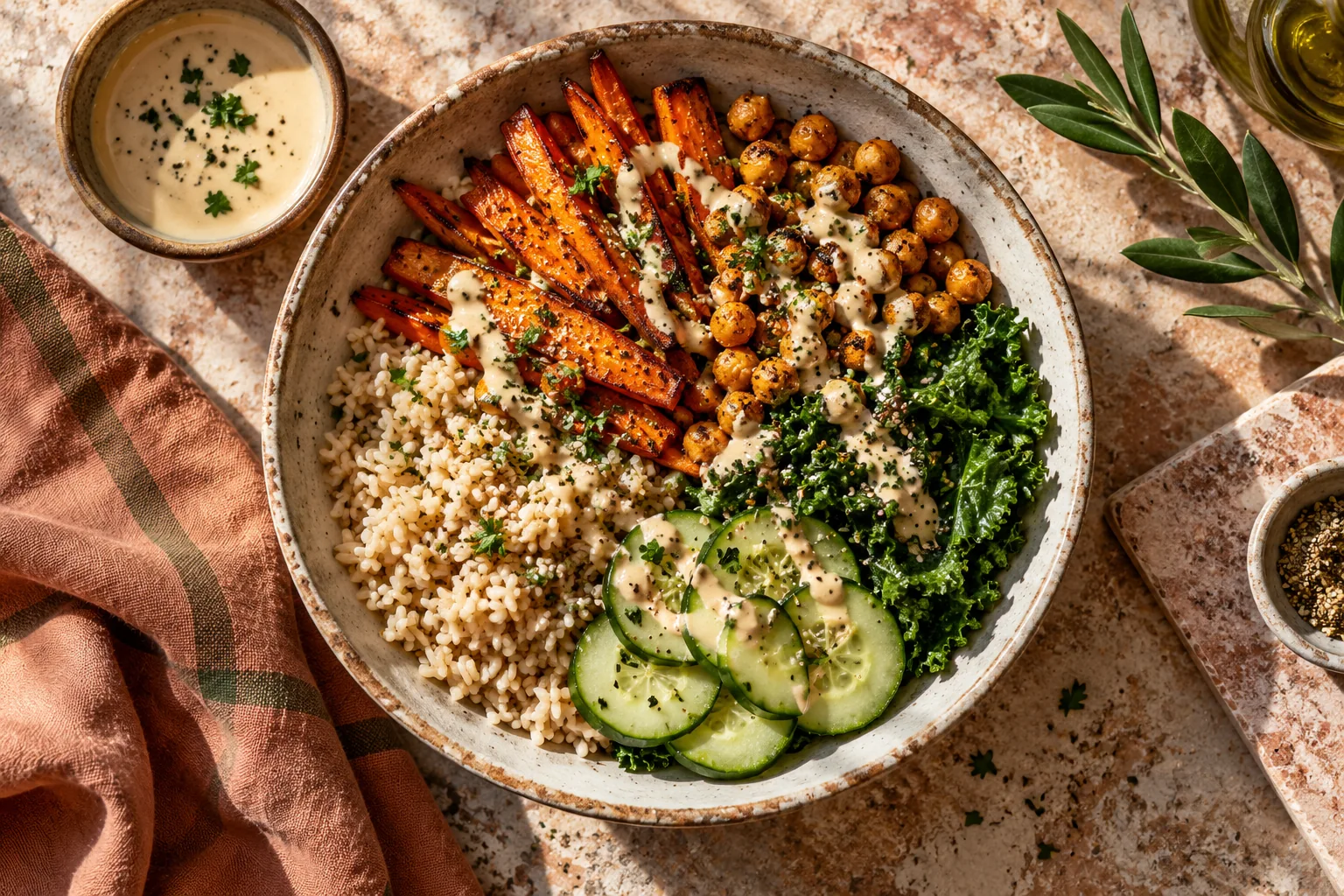
Combine ¾ cup cooked rice, ½ cup chickpeas, ½ cup cooked carrots, and a small handful of shredded cabbage. Toss the chickpeas with lemon dressing before adding them. Finish with parsley and a spoonful of seeds if suitable. The carrot supplies softness while cabbage keeps the bowl from feeling uniform.
2. Lentil, potato, and greens
Use ¾ cup cooked potato pieces, ½ cup cooked lentils, and a handful of tender greens. Add yogurt herb sauce and sliced radish. Choose lentils that hold their shape if you want distinct pieces; softer lentils create a different but still useful texture. Mix gently to avoid crushing the potatoes.
3. Tofu, broccoli, and grain
Arrange cooked tofu prepared according to an appropriate method beside ¾ cup cooked grain and a generous handful of cooked broccoli. Add shredded carrot and lemon dressing. A small amount of a suitable savory condiment can change the flavor, but taste first because such condiments vary in saltiness and ingredients.
4. White bean, cucumber, and couscous
Combine ¾ cup prepared couscous with ½ cup white beans, chopped cucumber, and parsley. Dress the beans separately, then fold everything together. Add chopped tomato immediately before serving if you prefer less liquid collecting at the bottom. Couscous commonly contains wheat; use an appropriate alternative if needed.
Step five: assemble for the way you will eat
For an immediate meal, lightly dress the base, add the larger components, and finish with crisp toppings. For a packed bowl, separate wet and dry parts where possible. The attractive overhead arrangement is optional; distributing the ingredients makes more sense when you want every bite to include a little of everything.
Prepared grains and vegetables still require safe handling. Consult the FoodSafety.gov cold storage guidance and relevant package instructions rather than assuming every component keeps for the same period. Build your preparation schedule around the most perishable ingredient.
Adjust a bowl that is not quite working
Make a small change to one spoonful before changing the whole bowl. If the mixture feels dry, try a little more dressing or a spoonful of a suitable creamy ingredient. If it feels heavy, test a crisp vegetable or a small squeeze of lemon. When the dressing is already sharp, adding more acid is unlikely to solve the problem; an undressed portion of the base may soften it.
For a watery bowl, lift the solid ingredients into a clean bowl and add the collected dressing gradually. Next time, drain washed vegetables and canned ingredients well, and add juicy vegetables close to serving. These adjustments concern texture and flavor, not food safety. Discard food when its storage history is uncertain rather than trying to rescue it with seasoning.
Bowl-building questions
Do I need a grain?
No. Potatoes, noodles, greens, or another suitable base can work. Choose a foundation that fits the other ingredients and the meal you want.
Why does my bowl taste bland?
Taste the base and main component separately, then together. You may need seasoning through the layers, a little acidity, or a stronger-flavored sauce, rather than more toppings.
Can I prepare bowls for several lunches?
Prepare components in amounts you can store and use safely. Keep dressings and crisp toppings separate. Our meal planning guide helps match preparation to your schedule.
Once you find a combination you like, write down the sauce and texture pairing. For a change of format using similar ingredients, explore these plant-based lunch ideas.