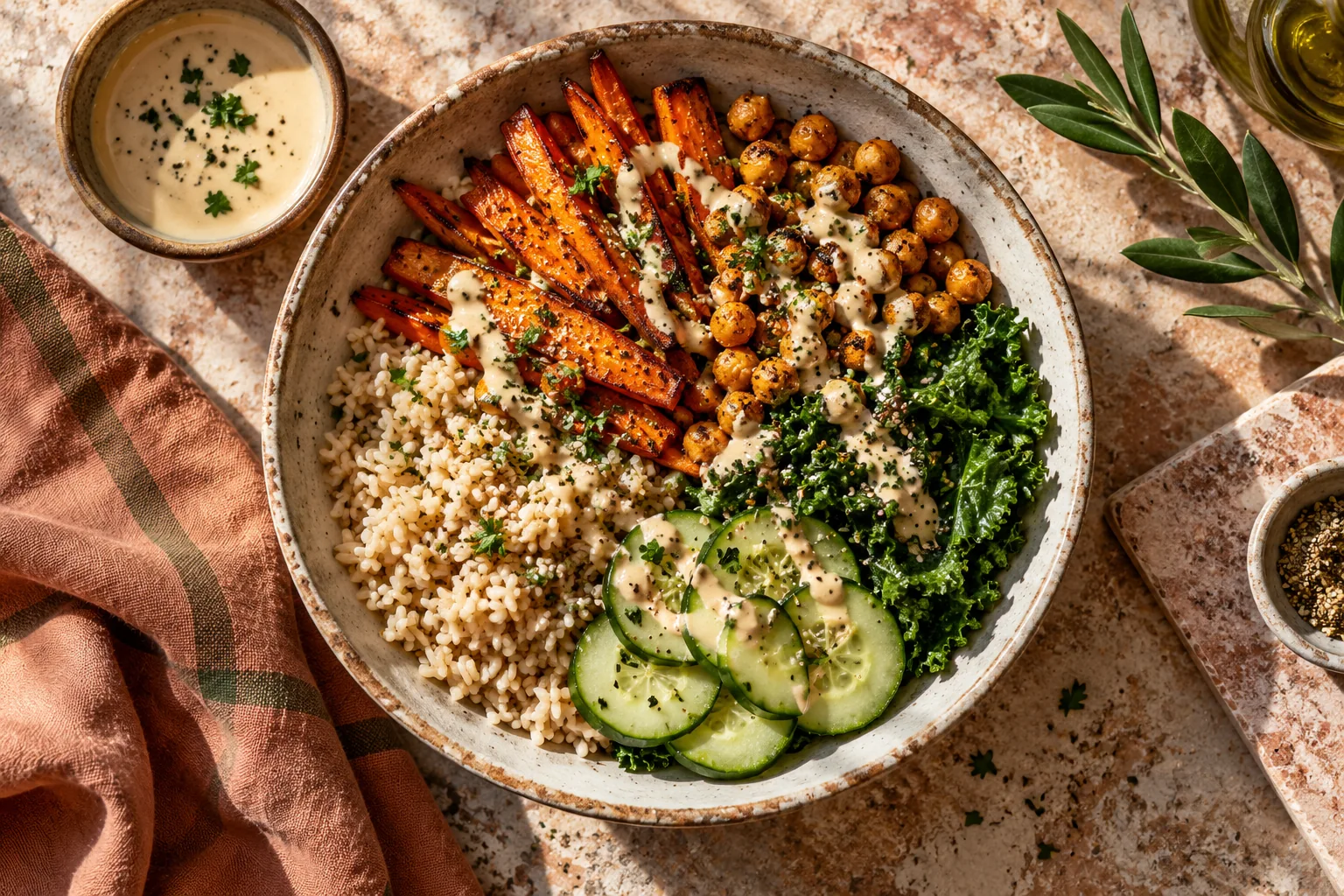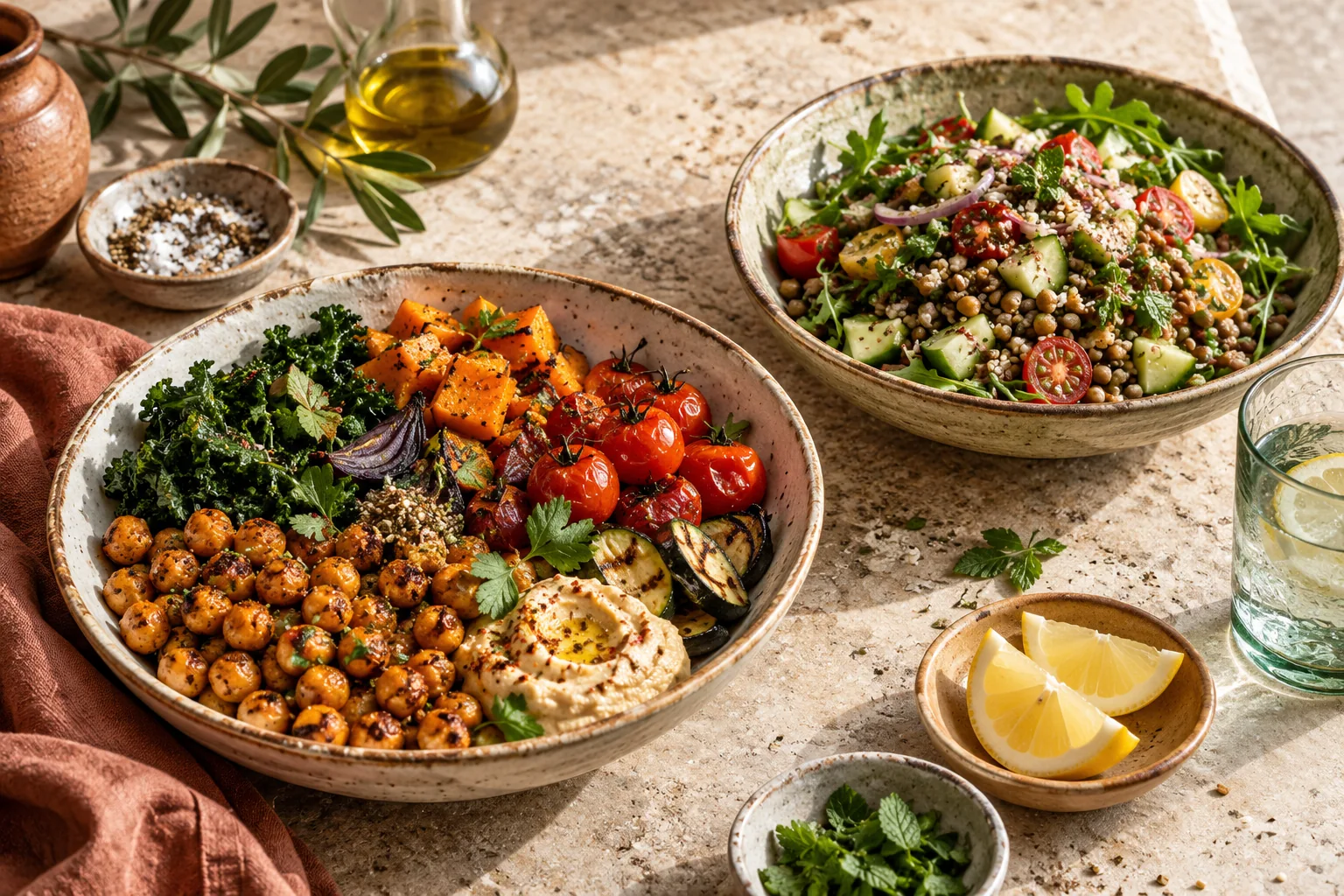
Useful plant-based lunch ideas combine ingredients you already enjoy in a format that suits your day. A sandwich travels differently from a soup, and a crisp salad needs different packing from a warm grain bowl. Start with the eating situation, then choose beans, lentils, tofu, vegetables, grains, and seasonings that work together.
Choose the format before the shopping list
If lunch happens at a desk without reheating facilities, a bean sandwich or composed salad may be convenient. If a suitable reheating setup is available, soup, stew, or a cooked grain bowl offers another route. When taking perishable food away from home, plan how it will remain appropriately chilled until it is eaten or reheated.
Think about utensils and appetite as well as ingredients. A deeply filled wrap may be awkward to eat between appointments. A container with a wide opening is easier for a substantial salad than a narrow jar. These details can make an ordinary lunch more usable without changing the food itself.
| Lunch format | Useful foundation | Keep separate |
|---|---|---|
| Sandwich | Mashed beans and sliced vegetables | Very wet fillings |
| Grain bowl | Cooked grain, lentils, vegetables | Crunchy toppings |
| Chopped salad | Chickpeas, cabbage, cucumber | Dressing when carrying |
| Warm soup | Beans, tomato, broth | Bread or crackers |
The mashed chickpea sandwich
For roughly two modest sandwiches, drain and rinse one standard can of chickpeas, about 1½ cups drained. Mash with a fork until some chickpeas break down and others remain in small pieces. Stir in one tablespoon olive oil, one tablespoon lemon juice, two tablespoons finely chopped celery, and a little mustard if you like its flavor.
Taste before seasoning. Mustard and canned chickpeas can vary in saltiness, so add salt gradually. Spread the mixture on bread with lettuce or thinly sliced cabbage. If it seems too dry, add a little more olive oil or a spoonful of plant-based yogurt. If it is loose, mash more of the chickpeas to help it hold together.
This filling also works in a bowl alongside crackers and vegetable sticks. That is useful when the bread you have is too delicate for a thick sandwich. For variety, replace celery with grated carrot, or add finely chopped pickles and reduce the lemon accordingly. Check the labels of prepared condiments when following a vegan diet or managing allergens.
A lentil salad with a practical flavor pattern
Start with one cup of cooked, drained lentils that hold their shape. Add half a cup each of chopped cucumber and grated carrot, plus a small handful of parsley. Mix a dressing from one tablespoon olive oil, two teaspoons vinegar, and half a teaspoon mustard. Toss lightly, taste, and adjust.
The useful pattern is earthy lentils, crisp vegetables, something acidic, and fresh herbs. You can change each part without losing the idea. Use finely sliced cabbage instead of cucumber, lemon instead of vinegar, or dill instead of parsley. If using lentils from a pouch or can, follow the package directions and drain them if appropriate.
Add bread, potatoes, or a cooked grain if that makes the lunch work better for you. Avoid choosing every component solely because it belongs to a particular food category. Flavor matters: a meal that sounds sensible but tastes flat will rarely become a dependable part of your week.
A pantry soup to adapt
White bean and tomato soup framework
Gather one tablespoon olive oil, one small chopped onion, one standard can of chopped tomatoes, one can of drained white beans, and one to two cups vegetable broth. Add a handful of chopped greens if available.
- Soften the onion in the oil in a saucepan, stirring so it does not scorch.
- Add tomatoes, beans, and enough broth for the consistency you prefer.
- Bring to a simmer and cook until the onion is tender and the flavors have combined.
- Add greens and cook until they reach the texture you enjoy. Season after tasting the broth.
The amount of broth determines whether this becomes a spoonable stew or a lighter soup. Keep extra liquid nearby instead of adding everything immediately. Crushed beans thicken the base without a separate thickener. A pinch of smoked paprika changes the direction; chopped basil or parsley gives a fresher finish.
This example is not a tested recipe, and the suggested ingredients will behave differently by brand and pan. Watch texture and heat carefully. If preparing it ahead, follow appropriate cooling, refrigeration, and reheating guidance rather than leaving the saucepan out until the next meal.
Give tofu a place in the rotation
For a tofu bowl, choose a product intended for cooking and follow its package instructions. Cut it into manageable pieces, remove excess surface moisture, and cook using your preferred appropriate method. Combine it with rice, shredded cabbage, and a dressing of lime juice, oil, and a suitable savory condiment.
Tofu varies considerably in firmness. A silken product will not behave like firm tofu in a pan. Buying the right texture for the method is often more helpful than searching for a more complicated recipe. If tofu is not appealing or suitable, use chickpeas or another ingredient you enjoy.
Spend on flavor you will actually use
Budget-conscious lunch planning starts with overlap. A cabbage can supply crunch for sandwiches, salads, and bowls. One bunch of parsley can finish lentils and soup. Canned beans save preparation work; dried beans may suit you when you have time and a cooking method you trust. Compare local prices and usable portions rather than assuming one format is always cheaper.
Choose one sauce direction for a few lunches. Lemon and olive oil, for example, can work with both beans and grains. A shelf full of specialty condiments is less useful than a small set you regularly finish. Frozen vegetables can also offer flexibility when fresh produce is expensive or difficult to use in time.
Pack for texture and safe handling
Use clean containers, label prepared components, and check the FoodSafety.gov cold food storage chart for ingredient-specific guidance. Storage life depends on the food and handling, not on whether a meal is plant-based. Follow product instructions where they are more specific.
Keep crisp toppings dry, sauces in a sealed container, and bread away from juicy vegetables. If there is no dependable way to keep a perishable lunch appropriately chilled, choose another arrangement. Our flexible meal planning guide explains how to plan smaller batches around changing schedules.
Plant-based lunch questions
Does plant-based mean every ingredient must be vegan?
People use the phrase differently. These examples can be made without animal ingredients, but labels and prepared sauces still need checking if you require a vegan meal.
How do I avoid a dry grain bowl?
Add a sauce and a moist component such as dressed beans or cooked vegetables. Toss some dressing through the grain before arranging toppings. See our bowl assembly guide for proportions.
What is the simplest place to start?
Choose one can of beans, one vegetable you like, and one familiar format. Make a small amount, note what you would change, and build your next lunch from that information.
A useful lunch rotation can be very small. Keep the format dependable, change one ingredient at a time, and let texture and flavor do the work.